Showing posts with label water usage. Show all posts

Sunday, March 3, 2019

Laudato Si Sunday Reflection: Seeing rightly, living rightly

Today's reflection is brought to you by
Luke 6:39-45.

You challenge us,
O Christ,
to see rightly.

Our blind spots
to your will in our world
come from our own prejudices.

It is easier
to find fault with others
than to address our own inadequacies.

Known by the fruit we bear,
we must ask ourselves:
where does our treasure lie?

You tell us
that our words and actions
arise from the abundance
of our hearts.

Help us,
O Christ
to let our hearts rest
in the beauty,
goodness and truth
that is you
so that we may increase
your beauty,
goodness and truth
in our world.

Show us how to see rightly
and live rightly.

+Amen

 * * * * * * *

This week's rereading of paragraphs 27-31 of Pope Francis' encyclical letter, Laudato Si: On Care for our Common Home (the entire encyclical can be accessed by clicking here) reminded me of all the water that I take for granted. The Pope and his encyclical writer friends preface their comments on water use by pointing out that "... the habit of wasting and discarding has reached unprecedented levels. The exploitation of the planet has already exceeded acceptable limits and we have still not solved the problem of poverty." (paragraph 27).

Water is one of those things we waste and discard without thinking. It isn't just important, it's essential to life of all kinds -- "terrestrial and aquatic ecosystems" need to be everyone's concern: "Water supplies used to be relatively constant, but now in many places demand exceeds the sustainable supply, with dramatic consequences.... Water poverty especially affects Africa where large sectors of the population have no access to safe drinking water or experience droughts which impede agricultural production." (paragraph 28).

Of course, it's always the poor -- those who lack security, wealth, and political power -- that are most affected, as noted in paragraph 29. In the developing world, they often don't have access to safe water, or have to walk long distances to access it. But even here in a "developed" country like Canada, we still have 60 drinking water advisories on First Nations reserves, though I am happy to note that's down from 132 advisories since I last looked at the website, and 3 of 4 of the advisories in my own Alberta backyard have been resolved. Inadequate water treatment, or pollution of water sources through industrial activity are an issue faced by our marginalized brothers and sisters all over the world. Too often humans are desecrating the fresh water God gives us, which flows and flows until it reaches the oceans, polluting them as well.

To add insult to injury, the poor face inadequate fresh water supplies in some places because large corporations are privatizing and bottling water, selling it at higher prices per litre/gallon than gasoline. Paragraph 30 states that "access to safe drinkable water is a basic and universal human right, since it is essential to human survival and, as such, is a condition for the exercise of other human rights." And yet we in North America continue to use water and buy bottled water as if it is an unlimited resource. Yesterday on my walk with the dog, I picked up two empty plastic bottles, grrrr. (Plastic is one of my pet peeves these days!)

Last summer, Lee and I visited the Athabasca Glacier from which our North Saskatchewan river takes its waters, and this time, there was a good-sized stream flowing off the glacer long before we reached it. Our city depends on water from the Athabasca Icefields. What will happen when they're gone? Global climate change means that some parts of the world are already facing acute water shortages, but still we forget that we can't create glaciers, or rainstorms, or a single water molecule the way God can.

Paragraph 31 points out the possibility of water shortages within a few decades, but our brothers and sisters in Australia, California, South Africa and so many other places know what it is to live with water scarcity. They have already been forced to implement measures to conserve and protect water sources. Fresh water is anything but infinite, and we should all be doing the same.

St. Francis sang the praises of Sister Water, "so useful, humble, precious and pure" in Il Cantico del Sole (Canticle of the Sun), as if she was a person standing right beside him. We would do well to treat water with that kind of love and respect.

So today, I'd like to invite my readers to get themselves a glass, go to the kitchen faucet, and fill it, and reflect on whether we are seeing water rightly -- as an extremely valuable resource -- and using water rightly. Is our water clean and clear? Take a sip and savour. Consider: how much does it cost? How do we take it for granted? How can we use less/pollute it less? Do we use phosphate-free dish soap and laundry soap? Do we remember to carry our own water bottles so that water sources aren't comodified for our convenience? Can we cut down on less critical water use such as lawn watering, sidewalk spraying, and car washing for the sake of the environment? How can we support our brothers and sisters who are affected by water shortages and drinking water advisories?

Do we treat Sister Water with the respect she deserves? Or is there room for improvement? Lord, that we may see.

Saturday, September 5, 2015

Laudato Si: Sunday Reflection #7... What are you made of?

My funny suntanned feet in the icy clear waters of Lake Minnewanka
I'm guessing I'm made up of about 60% water, a whole slew of minerals, with an intellect, some love, and a soul thrown in for good measure. You?

That first ingredient, water, is the topic of paragraphs 27-31 of Pope Francis' encyclical letter, Laudato Si: On Care for our Common Home (the entire encyclical can be accessed by clicking here.) The Pope and his encyclical writer friends preface their comments on water use by pointing out that "... the habit of wasting and discarding has reached unprecedented levels. The exploitation of the planet has already exceeded acceptable limits and we have still not solved the problem of poverty." (paragraph 27).

And water is one of those things we waste and discard without thinking. It isn't just important, it's essential to life of all kinds. The Pope's main focus is on human life, but he doesn't forget "terrestrial and aquatic ecosystems" in his concern: "Water supplies used to be relatively constant, but now in many places demand exceeds the sustainable supply, with dramatic consequences.... Water poverty especially affects Africa where large sectors of the population have no access to safe drinking water or experience droughts which impede agricultural production." (paragraph 28).

Of course, it's always the poor -- those who lack security, wealth, and political power -- that are most affected, as noted in paragraph 29. In the developing world, they often don't have access to safe water, or have to walk long distances to access it. But even here in a "developed" country like Canada, on June 30, 2015, there were 132 drinking water advisories on 92 First Nations reserves, 4 of them ongoing in my own Alberta backyard. Inadequate water treatment, or pollution of water sources through industrial activity are an issue faced by our marginalized brothers and sisters all over the world. Too often humans are desecrating the fresh water God gives us, which flows and flows until it reaches the oceans, polluting them as well.

To add insult to injury, the poor face inadequate fresh water supplies in some places because large corporations are privatizing and bottling water, selling it at higher prices per litre/gallon than gasoline. Paragraph 30 states that "access to safe drinkable water is a basic and universal human right, since it is essential to human survival and, as such, is a condition for the exercise of other human rights." And yet we in North America continue to use water and buy bottled water as if it is an unlimited resource, even during drought times like we in the west experienced this summer. Will suburbanites always think green lawns are critically important? One hopes not!

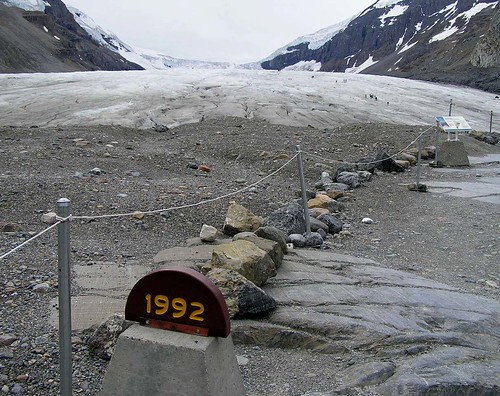
Every so often, we visit the Athabasca Glacier from which our North Saskatchewan river takes its waters, and every time, I feel anxious as we walk the the stony path that holds markers showing how much it has melted over the years. Global climate change means that some parts of the world are already facing acute water shortages. Water is a gift that we are given. We forget that we can't create glaciers, or rainstorms, or a single molecule the way God can.

Paragraph 31 points out the possibility of water shortages within a few decades, but our brothers and sisters in Australia, Brazil, California and so many other places know what it is to live with water scarcity. They have already been forced to implement measures to conserve and protect water sources. Fresh water is anything but infinite, and we should all be doing the same.

St. Francis sang the praises of Sister Water, "so useful, humble, precious and pure" in Il Cantico del Sole (Canticle of the Sun), as if she was a person standing right beside him. He may have guessed that she is within all of us, a big part of our bodily composition. We would all do well to treat water with the kind of love and respect God wants us to show all of creation.

So today, I'd like to invite my readers to get themselves a glass, go to the kitchen faucet, and fill it. Is it clean and clear? Does it have an odor? Is it drinkable? Take a sip. How much does it cost? How do we take it for granted? How much do we waste or pollute it? How can we pollute it less? Where can we find phosphate-free dish soap and laundry soap? What other kinds of things do we pour down our drains without thinking? How can we remember to carry our own water bottles instead of buying bottled water, so that water sources aren't commodified for our convenience? Can we cut down on lawn watering, sidewalk spraying and car washing for the sake of the environment? How can we support our brothers and sisters who are affected by water shortages?

Do we treat Sister Water with the respect she deserves? Or is there room for improvement?

*******
A prayer for our earth

All-powerful God, you are present in the whole universe
and in the smallest of your creatures.
You embrace with your tenderness all that exists.
Pour out upon us the power of your love,
that we may protect life and beauty.
Fill us with peace, that we may live
as brothers and sisters, harming no one.
O God of the poor,
help us to rescue the abandoned and forgotten of this earth,
so precious in your eyes.
Bring healing to our lives,
that we may protect the world and not prey on it,
that we may sow beauty, not pollution and destruction.
Touch the hearts
of those who look only for gain
at the expense of the poor and the earth.
Teach us to discover the worth of each thing,
to be filled with awe and contemplation,
to recognize that we are profoundly united
with every creature
as we journey towards your infinite light.
We thank you for being with us each day.
Encourage us, we pray, in our struggle
for justice, love and peace.

+AMEN.

(A prayer for our earth and all quotations from Laudato Si: On Care for Our Common Home © Libreria Editrice Vaticana)

Next up: #8... Biodiversity? What's it worth?

Thursday, July 14, 2011

Simple Suggestion #41... Track your water usage

Water is an incredibly important commodity in our world, simply because we can't live without it. We've had just a few warm days this summer, and they have made me more aware of the importance of keeping hydrated. Hot weather (though we haven't seen much of it yet) also makes me think of all my brothers and sisters around the globe who have to walk for miles to get their daily ration of something that flows too freely in my sink. I know that I live in the country where water use is highest per capita, and that worries me a little when I hear dire predictions about water shortages due to global climate instability. Of course, with all the rain and recent flooding in Alberta, it's hard to believe in water shortages here.

Even so, we've been trying to cut down. Our family has been tracking our water usage for the last several years through graphing the cubic metres that are reported on our monthly bill in an effort to reduce our use, and we have made some important strides in lowering the graph line by making a few changes. Rather than watering a big green rectangle, what grass we have has to fend for itself, as most of our front lawn has been turned into perennial beds with plants that are drought tolerant. When our top load washing machine gave up the ghost, we installed a front load washer that uses an unbelievably small amount of water in comparison (my husband jokes that it's like beating damp rags against rocks, but it gets our clothes cleaner than the multi-litre top-loader ever did). We've installed low-flow taps, showerheads, and toilets, and a handy soap-up valve in our shower. I've also become more careful about letting the tap run. When the water is cold and I need hot, I fill my watering cans until I get the desired temperature for the sink, and water my houseplants. When a waterbottle isn't emptied at school, my plants get another drink.

These are small steps, but important ones. Feel free to leave your favourite water saving tips. The thing is, change begins with us, and with seven billion of us on the planet, it might not hurt to re-evaluate our relationship to the water that gives everything life.


P.S. Looking for more Simple Suggestions? Try here.