Showing posts with label book review. Show all posts

Friday, April 1, 2022

Book Review: This Is How It Always Is by Laurie Frankel

 As a follow up to yesterday's post, here's something I've been meaning to moodle about for a while -- Laurie Frankel's book, This Is How It Always Is (New York: Flat Iron Books 2018, ISBN 9781250088550). It's a fictional account of a family coming to terms with their child/sibling's gender dysphoria, and their acceptance of the journey as it unfolds.

In learning about my own family situation, I've read several good non-fiction books that helped me to understand the importance of supporting our youngest child as they "grew into" the person they really are. This fictional account of Claude's journey to becoming Poppy helped me to recognize certain similarities in our own family's experience of seeing and welcoming a non-binary person among us. Although it is fiction, it reminded me that no one is really alone in these situations.

Books like this one are important, because they help us to move beyond our own experiences and come to an understanding that, as with so many situations, our human knowledge is imperfect. So often, we have to feel our way along, making adjustments, until we get things right, or close to it. Parenting is never as simple as we'd like to think. As Rosie, Poppy's mom, says on page 378,

Parenting always involves this balance between what you know, what you guess, what you fear, and what you imagine. You’re never certain, even (maybe especially) about the big deals, the huge, important ones with all the ramifications and repercussions. But alas, no one can make these decisions, or deal with their consequences, but you…. 

That is a scary thing. And that's our experience too... We fuddled along and made many mistakes, but kept trying our best. After necessary surgical changes our child fits and feels more comfortable in their skin, whereas before, they chafed in an ill-shaped body. Can you imagine how that would feel?

Stating the obvious, life is complicated. Being transgender will never be easy in a world that is slow to understand, but it’s easier than living in a body that doesn’t fit, with the suicidal tendencies that too often come with that. If our culture, like Thailand's, accepted a certain fluidity when it comes to gender, suicide rates would fall, trans folks wouldn't have to be afraid of being targeted, and we wouldn't have to have the Trans Day of Remembrance every November 20th. 

Fortunately, for our family, our kid is strong and has managed to withstand some very tough times. I see their joy now that their body matches who they know themself to be, and that makes it all worth it. After some years of struggle, they are beginning to live into their life more fully, to try to BE without anxiety. There will always be strange looks and people who don’t understand, but the ones who know them love them as they are. 

I dream of a day when no one looks askance at anyone else for being different.

Laurie Frankel's This Is How It Always Is is a beautiful expression of the understanding and acceptance of a family who helps their gender-fluid child find herself. Books like this help people who don't know (or don't realize they know) gender-fluid people to gain some understanding of life beyond their own experience. That's what good fiction does -- it brings awareness of different ways of looking at the world so that we can accept each other better.

I highly recommend this book to anyone who is a parent, or who loves someone struggling to be who they know themself to be.

Wednesday, July 1, 2020

Canada Day Book Review: From the Ashes by Jesse Thistle

From the AshesI am a proud Canadian. I am so happy to live in this country we call Canada, but I also can't deny its shadow sides.

When I was small, my best friend was a wonderful girl of Indigenous origin who had been taken from her parents at the age of three in what we now call the Sixties Scoop, which is something of a misnomer for events that took place from the 50s right through to the late 90s (and even the present day) in some cases.

My friend and I didn't know about cultural genocide as we played together, running loose all over our small town in Saskatchewan. I had no idea that my happy childhood was her main source of happiness at that time, a respite from life with a white foster family where different kinds of abuse deeply affected her and her sister.

For most of my life, Canada Day has meant celebrations of our country's goodness, beauty, and grandeur, some of which I was blessed to see on family summer vacations in the mountains or on the coasts of British Columbia. I was always proud of our country's peacekeeping track record, its welcome of immigrants and refugees, including those from the Underground Railroad for black settlers from the US, and other sources of struggle overseas, its resultant multiculturalism, and its efforts to stand up for justice in world conflicts.

Of course, as time has passed, social media has brought a wider awareness of the many places where Canada has fallen short of its professed high ideals, and as I have matured, it has become impossible to wear rose-coloured glasses when it comes to my country. Since reconnecting with my childhood friend a few years ago thanks to Facebook, when I put on my red and white Canada Day t-shirt (sporting our anthem's lyrics), I hesitate for a moment and think of all those people for whom the concept of Canada as our home and native land causes deep hurt.

This year, in the light of events since the end of May, I am thinking especially of people of colour who have experienced racism at the hands of white settlers and their descendants, people just like me who have forgotten that this land wasn't ours to begin with.

The good thing is that Canada is generally a wonderful place, full of many opportunities and freedoms for those who manage to come and live here. My family of origin, descended from Russian-German farmers, has lived in Treaty 6 territory for well over 100 years, and we have reaped many benefits over time.

The terrible thing is that most of the people we unwittingly displaced have not fared nearly so well.

So even as I celebrate Canadians' good fortune in living in this wonderful land called Canada, I am thinking of those who have experienced its darknesses in the forms of systemic racism that can lead to family breakdown, deprivation, poverty, addictions, and abuse. To that end, I'm reading From the Ashes: My Story of Being Metis, Homeless, and Finding My Way, the story of Jesse Thistle, a man who, with his two brothers, was also a victim of the Sixties Scoop.

From the Ashes is one of this year's Canada Reads book, and more than an eye-opener. Gritty and honest, told in heartbreaking poetry and prose, it has made me cry on more than one occasion. As I read, I can't help but put myself in the place of Jesse, asking myself how I would have reacted in the situations he found himself in, realizing the huge struggles that arose from systemic racism and the loss of his parental relationships. His story has made me more determined than ever to work for reconciliation and justice for Indigenous people and for all who are treated unfairly by the descendants of white settlers.

I can't recommend this book enough. If you have been wondering about your place in recent anti-racism events since the death of George Floyd in Minnesota, it's worth making an effort toward self-education and a deeper understanding of the Canadians who have been treated even worse over the centuries than our black community members, who are relative newcomers. It's worth rethinking our place in Canada, period, remembering that we are all equal in God's eyes, and thus, should be in Canadian society, too. There is so much healing required. And it starts with us refusing to allow systemic racism to continue unchallenged. 

On this rather sodden, dark, and rainy Canada Day in Edmonton, I will finish Jesse Thistle's book, and encourage all my readers to read it, too. In addition, I pledge to continue volunteering in capacities that connect me to my Indigenous brothers and sisters and other people of colour, to look for more such opportunities for friendship and connection, and to find places and ways to stand against the racism that we white people have allowed to continue for too long.

It is only through rebuilding our country's self-understanding through relationships, reconciliation, and justice efforts that we can truly be proud Canadians -- together.

Wednesday, February 13, 2019

Book Review: Home Fire by Kamila Shamsie

Image result for home fires kamila shamsie
It's been a while since I've posted a book review, but given the fact that I keep mentioning this book to friends, I thought maybe I should also mention it to my readers. I really enjoy fiction that makes me wonder which aspects of a story might be true-to-life and that makes me think more deeply about my own assumptions, and this is one of those kinds of books.

Kamila Shamsie's Home Fire (Riverhead Books (Penguin Random House) 2017, ISBN 9780735217683) tells the story of three Muslim siblings who struggle to come to terms with their father's abandonment of their family, and what it could be like to be the children of a suspected jihadist in a world doing battle with ISIS. Shamsie's telling of an updated version of the classical story of Antigone is evocative, and starkly but beautifully told through the story's five main characters, each with their own unique voice and view of the unfolding tragedy.

When her younger twin siblings come of age, Isma Pasha, the eldest of three, journeys to the US to complete a PhD in sociology, and finds companionship with a less traditional Muslim named Eamonn Lone, though she hesitates to tell him about her family's past. Still in London, younger sister Aneeka puzzles over the increasing silence of her twin brother, Parvaiz, who, for a time, enjoys the attentions of a father-like mentor. As Parvaiz's dream of understanding about his father turns into a nightmare, Eamonn returns to London and delivers a parcel to Isma's aunt. He meets Aneeka, and the two fall in love in spite of Eamonn's father's unsympathetic history with the Pasha family. Home Secretary Karamat Lone, who held the position when the Pasha family sought information about their missing father, is the man who has the most to say when it comes to the fate of both families. I won't say more than this, as I don't want to be a spoiler!

I suspect that, here in the West, we shake our heads at the barbarity of ISIS without really understanding how young people could be disenfranchised to the point that they would choose to join the Islamic Brotherhood's form of Jihad. Kamila Shamsie's believable story about a breakdown in communication between sisters and brother has me thinking deeply about the importance of honesty, openness and trust in our relationships. There are so many layers to the kinds of issues she touches on in this story, and she lays them open for us to see and acknowledge.

It's only too easy to tell ourselves that we are alone, that others would never understand where we are coming from, and that we can't trust anyone but ourselves. But the fact of the matter is that we are usually too small to see the big picture without being willing to be open, to admit our mistakes, and to ask for help before things spin out of control. We need to come out of ourselves to really see others clearly.

The five characters of Home Fire learn this lesson the hard way, perhaps so that we can learn from their mistakes. And books that remind us of challenging lessons are always worth reading. This one will stay with me for a long time. If you're looking for a thought-provoking read, check it out.

Tuesday, August 1, 2017

Book Review: When the Moon is Low


For all the reading I do, I don't leave enough book reviews in these moodlings. But When the Moon is Low by Nadia Hashimi (ISBN 9780062369574) is a book that needs to be shared here. It's written by an Afghan-American pediatrician who tells a fictional story of an Afghan family trying to find its way from a country being destroyed by the Taliban to freedom in England in the 1990s.

I suspect that author Nadia Hashimi has drawn from some of the life experiences of her extended family to tell the story of Fereiba, a young Afghani mother whose engineer husband, responsible for water facilities in their city, is taken away one night by the Taliban. Her son, Saleem, is only 14, and not yet considered manly enough (according to Taliban rule) to accompany his mother on errands around Kabul. Life becomes impossible for Fereiba and her three children. She sells everything and relies on human smugglers to get to Iran, as most of her family left earlier, when the trouble began in their hometown of Kabul.

Thanks to falsified Belgian passports on which much of their money is spent, Fereiba's family makes it through Turkey to Greece, but it is there that Saleem tries to sell some of Fereiba's jewelry to pay for the remaining part of the journey and is caught by immigration police who ship him back to Turkey. Because of her baby's heart condition, Fereiba has no choice but to continue on with the little one and her daughter, hoping against hope that Saleem will somehow manage to make his way to England and rejoin his family.

Saleem's journey as an unaccompanied minor among refugees, farm labourers, human traffickers and contraband smugglers is a harrowing one. It's chilling to wonder how many kids are in the same boat, how many parents have been separated from their children, how many people have died while riding under trucks crossing borders, and related human costs. Nadia Hashimi has offered us, in our relatively peaceful and secure lives in North America, what is probably a fairly sanitized version of what many refugees must go through to reach better places than the war-ravaged countries they were forced to leave behind, and introduces us to compelling characters in Fereiba and Saleem. I would love to know people like them.

When the Moon is Low is worth a read simply to give fortunate North Americans an idea of the challenges faced by refugees and why we need to open our hearts and borders to those being displaced by human-made disasters and conflicts. I didn't realize that, after Syrians, Afghans are still the most numerous people in refugee camps twenty years after their exodus began, and heaven knows there are many other people who need homes because they are unable to return to their own. The news tells us snippets of their stories from places like Lesbos in Greece and Lampedusa in Italy, but since many other European countries have closed their doors to refugees, the patience of the Greek and Italian people who receive so many is wearing thin and it seems the tide of feeling about rescuing people from the rickety boats crossing the Mediterranean might be shifting...

But we are one human family. Nadia Hashimi's story of ordinary people -- with hopes and dreams like our own -- trying to survive extraordinary times is worth a read, if only to remind us of the needs of our sisters and brothers around the world. Everyone needs a home where they belong, and if the tables were turned, we would hope and pray for help just as they do. It's incumbent on us to be their source of help and hope. I can't recommend this book enough, especially if it moves us to get involved by giving what help we can...

Tuesday, November 1, 2016

If you could design a new world...

What if you were given a superpower that would allow you to design a new society? What would your blueprint look like? What would you keep from our present way of life? What would be unnecessary? What would you add?

There's so much dysfunction in our present existence (especially the US election news these days!) that it sometimes looks like the dystopian novels my young adults read. From the disintegration of families to the breakdown of the environment, the polarization in politics to the rampant over-consumption of our earth's resources -- the hectic and harried pace of society as we know it has dragged us further and further from being soulful people who value life in all its forms. You'd think we could come up with a better plan, no?

Lucky for us, Mark A. Burch has written his own alternate society in his new novel, Euterra Rising: The Last Utopia, which is being released this week. It's a fascinating story of the beginning of something better than life as we presently know it, a renovated existence where people pull together, where everyone has enough, where humans cooperate with nature, and where beauty is appreciated and cultivated daily. I was fortunate to read early drafts of the story, and my initial response to Mark was, "Where is this place? I'll be there in a heartbeat!"

Of course, Mark's view of a simpler world is one that has resonated with me ever since I attended a workshop he gave on Voluntary Simplicity and Personal Wellness, ten years ago this month. He was kind enough to stay in touch because his workshop filled me with many questions, and thanks to the emails that flew back and forth between us, a deep friendship formed. Mark's desire for a world less focused on the material and more in tune with the values of simplicity and sufficiency will always ring true for people who give serious consideration to life's true purpose.

Besides being a wise man in the areas of simplicity and sustainability, Mark is also an excellent writer, having been published many times. It's not easy to pen a good novel that teaches without being overly preachy, but there's an abundance of fresh ideas and suspense in Euterra Rising: The Last Utopia to carry the reader through to the story's end. Chapters begin with wisdom sayings that seem to come from sages beyond our time. The establishment of Euterra is juxtaposed with its later existence and the arrival of an "outsider" whose appearance threatens the community's existence, making for a real page turner. And the bonus is that there's another book in the works, if readers want more!

I would love to see this book become a best-seller, simply because it carries the seeds for many long-overdue conversations about the kind of world we really want to inhabit. We're used to the status quo, to feeling like we have no choice but to go with the flow, but it's past time that we begin to envision and build a better future than the one that's coming down the pipe whether we want it or not. Euterra Rising: The Last Utopia is available via Kindle or in hard copy, with the possibility that Euterra book clubs could be the launch pad for a better world (book club resources are available on Mark's website).

For more information, see http://markaburch.ca/, or visit Euterra on Facebook and meet Nota Dorne, one of the book's characters.

Better yet, pick up the book for yourself, share it with friends, and start imagining and creating the world you really want to inhabit...

Saturday, December 6, 2014

The whole truth for a Sunday

This week I paid a visit to my local library. It's been a few years since our family's weekly routine of hauling home a bag filled with children's books went by the wayside due to the onset of adolescence, but I'm still a sucker for great children's picture books! I brought one home called Old Turtle and the Broken Truth (2003, Scholastic, ISBN 0-439-32109-3), written by Douglas Wood, and illustrated with beautiful water colour images by Jon J Muth (I'm a sucker for water colour art, too!) 

Old Turtle is a beautiful story about a truth (like a meteorite) shooting through the sky and breaking up before it hits the earth. Animals find the truth, but realize that it is too sharp, with a piece missing that prevents it from "working properly." Then people find it, and declare it to be the most beautiful truth ever, enshrining it in a special place and fighting to keep it from others, causing all sorts of bloodshed, hatred, anguish and pain.

But a young girl with an open heart and mind goes to talk to grandmotherly Old Turtle, who gives the girl the missing piece of the truth. Gratefully receiving it, the girl takes it back to her people, who discover that the two pieces fit together perfectly, revealing the whole truth: "You are loved / and so are they." Discovering the whole truth, the people begin to be able to look at others... and see themselves, too.

Since reading the book, which I recommend to anyone with children, and even to adults(!), I've been reflecting on places where love of the 'other' has gone missing -- in relationships between nations and races, in our abuse of creation, in our refusal to accept difference.

I've also been thinking about places where violence is a daily occurrence, and where people are praying for change, partly because a blogger friend is presently living and working in East Jerusalem as an ecumenical accompanier who witnesses the hardships faced by people living in the midst of the conflict between Israel and Palestine. I'm learning a lot about what is going on by reading Debbie's blog (click here to read it yourself, and click here to read her husband Dean's excellent reflections). If both Israelis and Palestinians understood Old Turtle's piece of truth, there would be no need for walls or wars or burned out mosques -- and the division of Jerusalem into Jewish, Muslim and Christian sectors would be unnecessary...

In these dark days of Advent, as we wait for God, I am realizing how much he and she is needed in our world in the form of justice, mercy, peace, and love. There are so many places where the darkness is calling out for light. So, we can't just sit on our hands while we wait -- as today's Gospel reading says, we need to prepare the way and make God's paths straight so that she and he can touch all people, through our hands.

Come, O God,
light our darkness,
heal our lovelessness,
make us into your justice and so, bring us peace.
Let us always remember that, as we are loved, so are all the others you have created.

+AMEN.

Tuesday, June 17, 2014

Simple Suggestion #208... Read aloud

Before cinema, radio, television, and the internet, what did people do for entertainment? Lots and lots of different things, but the one I've recently rediscovered quite by accident is reading a book -- out loud.

On the way home from Lethbridge back in May, I opened my daughter's copy of The Girl Who Saved the King of Sweden (HarperCollins 2013, ISBN 978-1-44343-159-0), thinking I'd read a few chapters on the way home, and before long, I was chuckling to myself. The guy in the driver's seat (my hubby) asked what was so funny, so I quickly summarized the few pages I'd already read, and then continue reading Jonas Jonasson's very funny story aloud so that Lee and I could enjoy it together.


I read for almost five hours. My voice was shot, but we couldn't stop. I was supposed to drive the Calgary to Edmonton leg of the trip, but Lee was finding the story so amusing that he decided to drive on so I could continue reading to him. It was one of the fastest trips home in memory as we laughed together at the adventures of Nombeko Mayeki and the twin Qvist brothers, both named Holger, not to mention three Chinese forgers, an American potter, an angry young woman, and numerous international figures. The book had more twists and turns than the road up to Mount Edith Cavell, and Jonasson's wry humour made us both laugh many times at his ingenuity in crafting an entertaining story.

When you find something good, it's only natural to want to share it, but there's something really wonderful about sharing a book aloud with someone special. I think I enjoyed this one twice as much for Lee's reactions to it. It wasn't always easy to find time for reading, but we finally finished Nombeko's adventures last night... and my daughter insists that Jonasson's first book, The 100-Year-Old Man Who Climbed Out the Window and Disappeared (HarperCollins 2012, ISBN 978-1-44341-9-109) is even better, so guess which book we'll share next?

Today's suggestion is simply to share a book out loud. The trick is to find the right one, a willing partner in literary enjoyment (preferrably one who will read to you when your voice gets tired), and time to read it together. I highly recommend it -- and The Girl Who Saved the King of Sweden.

P.S. Looking for more Simple Suggestions? Click here.

Wednesday, April 16, 2014

Book review: The Blind Man's Garden

I was up late last night, reading. That's not so unusual, although the older I get, the less often it seems to happen. What is unusual is the aftershock of the book I was reading. It took a night's sleep for it all to sink in, I guess.

Three weeks ago, I found Nadeem Aslam's The Blind Man's Garden (Random House 2013, ISBN 978-0-385-67797-4) at my local library. I started reading right away, but several other books took precedence, probably because they were more cheerful. I found Aslam's book a tough read, probably because my world is anything but violent and chaotic since I live in a country that isn't as "heartbroken and sorrowful" as Pakistan and Afghanistan after 9/11.

More often than not, when I start a book and set it down to read others, it returns to the library unfinished. But after reading just a few pages and setting The Blind Man's Garden aside for almost three weeks, I had to return to it; Aslam's prose is that incredible. I can't quite describe his way with words, but perhaps it is enough to say that he has the eye of one who loves nature, and his descriptions are full of wonder whether he is describing a siege or a night sky. The added bonus is that the story's plot carried enough twists and turns that I didn't want to put it down. I've been up late three nights in a row.

The Blind Man's Garden tells the fictional but believable story of a family in Heer, Pakistan, and their struggles to live as good Muslims in a place caught up in the radicalization of Islam that coincides with the American involvement in Afghanistan. The story's characters reveal many different facets of a society mired in conflict, propaganda, and hysteria: Rohan, the patriarch and former school headmaster has no choice as his life's work is made into an academy for teaching boys to be terrorists; his son Jeo secretly heads into Afghanistan to aid civilians in the war zone with the aid of his foster brother, Mikal, and they meet the Taliban sooner than they expect with disastrous results; and Naheed, Jeo's wife, and her mother, Tara, expose day-to-day challenges in countries where the lack of women's rights is a given. Even the secondary characters will stay with me: the fakir who roams the countryside wearing a heavy load of chain links representing people's prayers, the Catholic priest who operates a school in a country increasingly antagonistic toward Christians, and the young woman with a snow leopard cub and her brother.

The book is clearly written for a western audience, giving insight into a society with which a North American like me has little experience. If these characters and their stories weren't enough to provoke thought, the tale is one of hard-fought redemption, which is one of my favourite themes in literature. I finished the book late last night, and it is only this morning that my eyes are misting over with its harsh beauty. I'd like to read parts of it again, but it has to go back to the library today.

From the flyleaf: "In language as lyrical as it is piercing, in scenes at once beautiful and harrowing, The Blind Man's Garden unflinchingly describes a crucially contemporary yet timeless world in which the line between enemy and ally is indistinct, and where the desire to return home burns brightest of all."

I can't say it better than that. If you're looking for a book to read, I recommend this one.

Tuesday, April 16, 2013

Book Review -- Quiet: The Power of Introverts in a World That Can't Stop Talking

My friend, Charleen, has a book club of her very own that I call CBC, for Charleen's Book Club. Our book for January-February was Susan Cain's Quiet: The Power of Introverts in a World That Can't Stop Talking (Crown 2012, ISBN 978-0-307-35214-9). Having given myself permission long ago to be the introvert that I am, I found the book to be an affirmation of the choices I've been making, and enjoyed seeing how some of the studies cited in its pages fit with my life and the lives of other introverts I know. Our book club's evaluation of it was positive, and since then, I've run into others who have read it and agreed with the sentiment expressed at CBC: "If only I had read this when I was young!" (If we had read it when we were young, perhaps we would have valued our quiet ways earlier in our lives.)

I read the book and didn't give it much more thought -- but over the last few weeks, through conversations with my most introverted daughter, I decided that maybe I should moodle about it here. After all, if it spoke to CBC and me, it's bound to speak to other quiet people who might need the affirmation it offers!

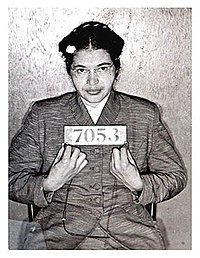
In Quiet, Susan Cain set out to show the value of introversion in a world that gives high regard and praise to those who are extroverted. The introduction tells the story of Rosa Parks, the woman of African descent whose quiet refusal to surrender her seat on an Alabama bus gave impetus to the Civil Rights Movement in the U.S. Her quiet presence and strength reinforced the work of Martin Luther King and those who came after him. The way Cain told the story made me wonder if an extroverted Rosa Parks would have been as effective. Somehow, I don't think so.

Cain's book cites many studies about introversion, and I found that by the time I was halfway through it, I'd read enough scientific and psychological proof for her opinion and was wishing it would end, but I plowed through so that I wouldn't miss anything. For me, the introduction and conclusion were probably enough -- but for those who like to get into detailed studies, there's plenty of information to back up Cain's arguments for introversion.

The realization that meant the most to me in this book is that it's only been the last hundred years or so that extroversion has become the model for so much of our world's interactions. Up to that point, being quiet, thoughtful and sensitive was seen in an equally positive light with being outgoing, lively and super-thick-skinned. But ever since Dale Carnegie published his book, How to Win Friends and Influence People, the quieter and more thoughtful ways of introverts have been somewhat disparaged by a society that's become more interested in 'putting yourself out there,' 'going for the gusto,' and 'showing the world!'

Of course, for the one-third to one-half of the introverted population (many of us quashing our introverted selves to appear as extroverts when necessary), extroversion is not what life is all about. We like quality relationships over quantity, so we often prefer settings that allow for intimate one- or two-way chats over noisy parties where we're expected to interact on a more superficial level with many people. We know that not everyone HAS to be a public speaker all the time -- some of us are cut out to listen, ask meaningful questions, and share well-considered ideas rather than blurt out our most recent thought for feedback. Reflection in our own space works better for many of us than brainstorming around a board room table ever will, and an office with a door that can be closed helps us to be more productive than a pod of cubicles encouraging group interaction.

Susan Cain's work has a lot of implications for our world -- and for the way we organize our work spaces, our classrooms, and our home life. I wish I had read this book before I started my teaching career, because education has evolved in such a way that introverts are more likely to fall through the cracks of the school system, and there are simple ways to counter-balance educational opportunities to help the introverted child. Every teacher should read this book.

But even if you're not a teacher, this post is for all you introverts out there who wish you were more extroverted (as I have at many different times in my life) -- if you're looking for encouragement to be who you are, Quiet might be one book to check out. If you don't have time to look for the book, click here for Susan Cain's website, The Power of Introverts, or watch the Ted Talk video below. It's not a complete explanation by any means, but it gives you some idea...


Though I know shyness and introversion are NOT the same thing, I think a Henri Nouwen reflection that arrived in my inbox earlier this month also fits introverts. His words below are lovely, and encouraging. Of course, the most important thing, whether you are introverted or extroverted, shy or outgoing, is to love yourself and those introverted and extroverted people around you! I'll leave the last word to Henri:

There is something beautiful about shyness, even though in our culture shyness is not considered a virtue.  On the contrary, we are encouraged to be direct, look people straight in the eyes, tell them what is on our minds, and share our stories without a blush. 
But this unflinching soul-baring, confessional attitude quickly becomes boring.  It is like trees without shadows.  Shy people have long shadows, where they keep much of their beauty hidden from intruders' eyes.  Shy people remind us of the mystery of life that cannot be simply explained or expressed.  They invite us to reverent and respectful friendships and to a wordless being together in love.
-- Henri Nouwen, Bread for the Journey, April 1

Tuesday, February 26, 2013

Book review: The Unlikely Pilgrimage of Harold Fry

Last week I ran into a friend at the library "Books to Go -- One Week Loan" shelf. We were both looking for a good read, and each of us found a book that we knew and recommended to the other, but I think Barb made the better recommendation. I took home Rachel Joyce's The Unlikely Pilgrimage of Harold Fry (Random House 2012, ISBN 987-0-385-67769-1) and dove into an amazing, believable piece of fiction.

Harold Fry is a retired brewery employee with a failing marriage and few friends. When he receives an unexpected letter from a friend, hewrites a hasty reply, and heads for the mailbox. And so begins a most unlikely pilgrimage, one that is full of poignant moments that reveal the difficult beauty of life and the ordinary extraordinariness of strangers as friends yet to be met.

Harold leaves home in his regular garb and yachting shoes (which create painful blisters in short order), but when he reaches his usual mailbox, the beauty of the day leads him to decide to walk a little further to the next one. As he walks, he thinks about his friend, whom he hasn't seen in 20 years, and somehow comes to the decision that he needs to walk all the way to the hospice where she's living her final days because somehow that will save her. That wouldn't be a big deal except the hospice is some 500 km to the north.

Harold's magical thinking, his reflections on his past, and his encounters with strangers (not to mention the media) make for an entertaining and thought-provoking read. Rachel Joyce's narrative pulls the reader along the highways and byways of England, where, with Harold, we meet a group of cycling mothers, a Slovakian doctor, a very famous actor, a journalist, a man in a gorilla suit, and so many others who come and go from Harold's life and leave him with very human and often very moving or unnerving stories that have him "trying to find a place within himself in which to keep [them]" (p.171). The pilgrimage transforms Harold and his wife Maureen in unexpected ways, and the reader is left with the sense that life is miraculous, that love is essential, and that even when prospects look dim, hope is somehow always there to carry us forward.

So, next time you run into me at the One Week Loan shelf, I know exactly what I'll put into your hands. Or if you aren't likely to run into me, you might like to sign out a copy of The Unlikely Pilgrimage of Harold Fry for yourself.